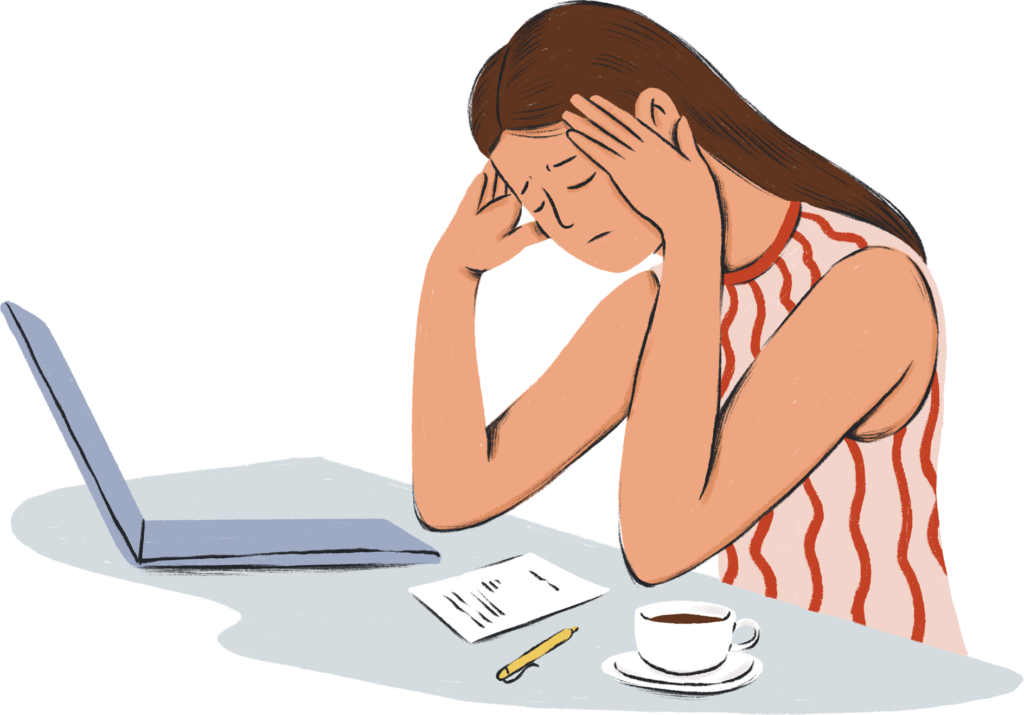
Rehearsing what to say, replaying conversations for hours, avoiding calls and events: social anxiety can shrink your life. Here is why it happens and how to build confidence step by step.

You rehearse what you will say before a phone call. At a gathering, you stay near the snacks and hope no one asks you a question. Afterwards, you replay every word and cringe for hours. You might want connection, but the fear of being judged gets in the way.
Social anxiety is one of the most common anxiety conditions. It often starts in childhood or the teen years and can quietly shape career choices, friendships and relationships for decades. The encouraging news is that it responds very well to treatment.
Key takeaways
- Social anxiety is an intense fear of being judged, embarrassed or rejected in social or performance situations.
- It is different from shyness or introversion because it causes real distress and gets in the way of life.
- Avoidance and “safety behaviours” bring short-term relief but keep social anxiety going.
- Cognitive behavioural therapy (CBT), including gradual exposure, is a well-established treatment.
- Small, regular steps build confidence more reliably than waiting to feel ready.
Shyness, introversion or social anxiety?
These three are often confused.
| Introversion | Shyness | Social anxiety | |
|---|---|---|---|
| What it is | A preference for quieter settings and time alone to recharge | Feeling awkward or hesitant in new situations | Intense fear of negative judgment that causes distress |
| Effect on life | Usually none. Introverts can enjoy socializing in their own way | Often eases as people warm up | Leads to avoiding situations or enduring them with dread |
| Thoughts | “I’d like a quiet night in” | “I don’t know anyone here yet” | “Everyone will see I’m nervous and think I’m stupid” |
You can be an outgoing person with social anxiety, and an introvert with none at all.
Signs of social anxiety
Social anxiety affects thoughts, the body and behaviour.
Thoughts
- Fear of saying something foolish or being seen as boring, awkward or incompetent
- Assuming others notice your anxiety and judge you for it
- Replaying conversations afterwards and focusing on what went wrong
Body
- Blushing, sweating, shaking or a shaky voice
- Racing heart, nausea or feeling your mind go blank
Behaviour
- Avoiding phone calls, meetings, presentations, parties or dating
- Arriving late or leaving early to limit conversation
- Speaking very little, avoiding eye contact or hiding behind your phone
- Over-preparing or rehearsing everything you say
Common situations that trigger it
- Speaking up in meetings or class
- Making phone calls or ordering food
- Eating or drinking in front of others
- Meeting new people, including dating
- Being watched while working
- Job interviews and performance reviews
- Disagreeing with someone or setting a boundary
For newcomers, social anxiety can be amplified by speaking a second language, unfamiliar workplace norms or fear of being seen as an outsider. Our newcomer mental health guide explores these pressures.
Why avoidance makes it worse
Avoiding a feared situation brings immediate relief. Your brain learns, “That was dangerous and I escaped.” Next time, the fear is stronger.
Many people also use safety behaviours: things they do to get through a situation, such as holding a drink to hide shaking hands, rehearsing sentences, staying silent or wearing makeup to hide blushing. These feel protective, but they stop you from learning that you can cope without them. They can also make you seem distant, which others may misread.
Example: Arjun, a software developer in Edmonton, rarely spoke in team meetings. He prepared notes for every possible question and kept his camera off on calls. He believed his colleagues thought he was incompetent. In therapy, he began making one short comment per meeting, then turned his camera on. The first few times his heart pounded. Within weeks, he noticed that no one reacted the way he feared, and his manager thanked him for his input.
Practical steps to build confidence
- Notice your predictions. Before a situation, write down what you fear will happen and how likely it seems. Afterwards, compare.
- Shift your attention outward. Social anxiety keeps attention focused on yourself. Try focusing on the other person, what they are saying and what you are curious about.
- Drop one safety behaviour at a time. Try putting the phone away, making eye contact or speaking without rehearsing.
- Build an exposure ladder. List situations from easiest to hardest and work up gradually, repeating each step until it feels more manageable.
- Limit the post-event replay. When you catch yourself reviewing a conversation, name it (“This is the replay”) and redirect your attention.
- Practise self-compassion. Speak to yourself the way you would speak to a nervous friend.
- Look after your body. Sleep, regular meals and limiting caffeine can lower baseline anxiety.
How social anxiety therapy helps
Cognitive behavioural therapy is one of the best-studied treatments for social anxiety. It usually includes:
- Understanding how your anxiety works and what keeps it going
- Testing anxious predictions through planned experiments
- Gradual exposure to feared situations
- Reducing safety behaviours and self-focused attention
- Building skills for assertiveness and conversation, if needed
Group therapy can also be powerful for social anxiety because it offers a safe place to practise. Our article on group therapy vs individual therapy explains the differences, and our anxiety and stress management group may be a good fit.
At Disha, social anxiety therapy in Edmonton is available in person in South Edmonton or online anywhere in Alberta. Online sessions can be an easier first step for people who find in-person meetings hard.
When to get help
Consider reaching out if fear of judgment stops you from working, studying, dating or making friends, or if you are using alcohol to get through social situations. Social anxiety often comes with low mood, so our article on understanding loneliness may also resonate.
Build confidence one step at a time
Book an online or in-person session with Disha. We will help you understand your social anxiety and practise steps that fit your life.
Frequently asked questions
Is social anxiety a real mental health condition?
Yes. Social anxiety disorder is a recognized anxiety condition. It is more than shyness because it causes significant distress and interferes with daily life.
Can social anxiety go away on its own?
It sometimes eases, but for many people it continues for years without support, especially when avoidance is high. Treatment helps most people improve.
Does alcohol help with social anxiety?
Alcohol may lower anxiety briefly, but relying on it can make anxiety worse over time and lead to other problems. It also stops you learning that you can cope without it.
Can online therapy help with social anxiety?
Yes. Online sessions can be an easier first step, and therapy can include planned practice in real-world situations between sessions.
How long does therapy for social anxiety take?
Many people notice progress within about 8 to 16 sessions of CBT, though it varies depending on the person and their goals.
Is group therapy good for social anxiety?
Group therapy can be very effective because it offers a supportive place to practise social situations and see that others share similar fears.
Disha Counselling & Wellness Centre is at 3818A 97 St NW #203, Edmonton, AB T6E 6N2, and offers online counselling across Alberta. Find us on Psychology Today and eMentalHealth.ca, watch short videos on YouTube and TikTok, or follow us on Instagram, LinkedIn, Facebook and Pinterest.
Reviewed by Mukesh Mishra, MSW, RCSW, Registered Clinical Social Worker and ACSW-approved RCSW supervisor at Disha Counselling & Wellness Centre. This article is general information and is not a substitute for individual professional advice. Counselling is not an emergency service: if you are in crisis, call or text 9-8-8 or call 911.
Ready to talk to someone?
If what you've just read sounds familiar, we are here to help. Explore Anxiety Therapy in Edmonton or book a free 15-minute consultation with Disha Counselling & Wellness Centre.
Book a Consultation
It’s easy and free!

Mukesh Mishra, MSW, RCSW
Mukesh Mishra, MSW, RCSW, is a Registered Clinical Social Worker in Alberta at Disha Counselling & Wellness Centre in Edmonton. He provides trauma-informed, culturally responsive counselling in English, Hindi, Nepali, Punjabi and Urdu, using CBT, EMDR, DBT and the Gottman Method, and is an ACSW-approved RCSW supervisor for social workers.