People joke about being “so OCD”, but real obsessive-compulsive disorder is exhausting and often hidden. Learn the signs, the myths and the treatments that help.
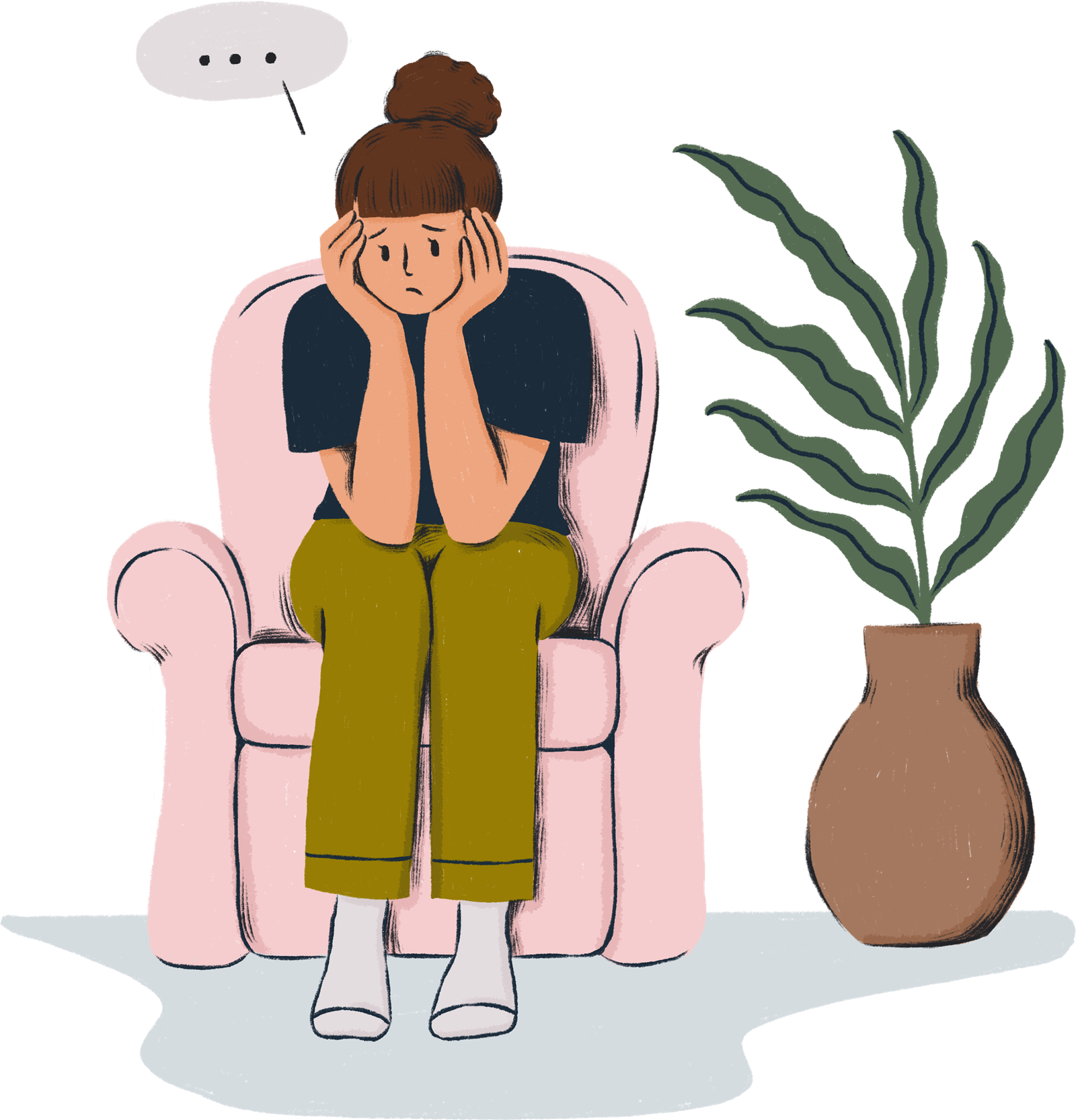
“I’m so OCD about my desk.” You have probably heard someone say it. In everyday language, OCD has come to mean liking things neat. For people who actually live with obsessive-compulsive disorder, the reality is very different: frightening thoughts that will not go away, and hours spent on rituals that bring only brief relief.
OCD is common, often misunderstood and very treatable. This guide explains what OCD really is, the forms it can take, and the approaches that help people take their lives back.
Key takeaways
- OCD involves obsessions (unwanted, distressing thoughts, images or urges) and compulsions (actions or mental rituals done to reduce the distress).
- It is not about personality or tidiness. Many people with OCD are not neat at all.
- Intrusive thoughts about harm, sex, religion or relationships are common in OCD and do not reflect what a person wants or will do.
- Compulsions bring short-term relief but keep OCD going in the long term.
- Cognitive behavioural therapy with exposure and response prevention (ERP) is the leading evidence-based therapy for OCD.
What OCD actually is
Obsessive-compulsive disorder has two main parts.
Obsessions are thoughts, images or urges that pop into your mind again and again, feel unwanted and cause strong anxiety, disgust or doubt. You know they are coming from your own mind, but they feel impossible to ignore.
Compulsions are things you do, physically or mentally, to reduce that distress or prevent something bad from happening. They might be washing, checking, counting, repeating phrases, asking for reassurance or mentally reviewing events.
OCD is diagnosed when this cycle takes up a lot of time, often more than an hour a day, causes significant distress or gets in the way of work, school, relationships or daily life.
Common myths about OCD
| Myth | Reality |
|---|---|
| OCD means being tidy or organized | OCD is about distressing thoughts and rituals. Many people with OCD live in cluttered spaces. |
| Everyone is “a little OCD” | Everyone has odd thoughts sometimes. OCD is when those thoughts stick and drive time-consuming rituals. |
| People with OCD enjoy their rituals | Compulsions feel like a burden. People do them to escape distress, not because they want to. |
| Intrusive thoughts reveal hidden desires | Intrusive thoughts are upsetting because they go against a person’s values. |
| OCD cannot be treated | Evidence-based therapy and, for some people, medication help most people improve significantly. |
Common types of OCD
OCD can attach to almost any theme. Some common ones include:
- Contamination: fear of germs, illness or dirt, with washing, cleaning or avoiding “unsafe” places
- Checking: doubts about locks, stoves or appliances, with repeated checking
- Harm: unwanted thoughts of hurting someone, with avoidance of knives, driving or being alone with others
- Symmetry and “just right”: needing things to feel even or complete, with arranging or repeating
- Relationship OCD: constant doubt about whether you love your partner or they are “the one”
- Religious or moral scrupulosity: fear of sinning or doing something morally wrong, with excessive prayer or confession
- Sexual intrusive thoughts: unwanted sexual thoughts that cause intense distress and shame
Sometimes people call OCD with mainly mental rituals “Pure O”. There are still compulsions, but they happen in the mind, such as reviewing, analysing, praying in a fixed way or neutralizing thoughts.
Understanding intrusive thoughts
Research suggests that most people have occasional odd or disturbing thoughts. The difference in OCD is how the brain responds to them. Instead of letting the thought pass, the person treats it as dangerous and meaningful: “Why would I think that? What if it means something about me?”
That reaction makes the thought feel more urgent, so it comes back more often. The harder you try to push it away, the stickier it becomes.
Having an intrusive thought about harming someone is not the same as wanting to. People with OCD are distressed by these thoughts precisely because they do not want to act on them.
New parents often experience intrusive thoughts about harm coming to their baby. Our article on postpartum depression and anxiety covers this in more detail.
The OCD cycle
| Step | What happens |
|---|---|
| Trigger | Touching a door handle, seeing a knife, a thought arriving out of nowhere |
| Obsession | “What if I get sick?” “What if I lose control?” |
| Distress | Anxiety, disgust, guilt or a feeling that something is not right |
| Compulsion | Washing, checking, seeking reassurance, mental reviewing |
| Short-term relief | The anxiety drops for a while |
| Long-term effect | The brain learns the ritual was necessary, so the obsession returns stronger |
This is why reassurance from family, however loving, often does not help in the long term. Each time the ritual “works”, the brain learns it must be repeated.
Example: Meera, a university student in Edmonton, began worrying that she might have left the stove on and caused a fire. At first she checked it once before leaving home. Within months, she was checking it 20 times, taking photos to look at on the bus and sometimes going home to check again. She was often late for class. In therapy, she gradually practised leaving after one check and sitting with the doubt. The anxiety was strong at first, then faded faster each time.
Treatment that works
Exposure and response prevention (ERP)
ERP is a form of cognitive behavioural therapy and is the leading evidence-based psychological treatment for OCD. With a therapist, you build a list of triggers from least to most difficult. Step by step, you face them while resisting the compulsion. Over time, the brain learns that the feared outcome does not happen, or that the anxiety can be tolerated and fades on its own.
ERP is done gradually and collaboratively. You are never forced to face something before you are ready.
Cognitive therapy
Cognitive work helps you understand the beliefs that fuel OCD, such as “Thinking something makes it more likely to happen” or “I must be completely certain”. Learning to tolerate uncertainty is a key skill.
Medication
For some people, medications prescribed by a doctor or psychiatrist can reduce OCD symptoms, especially when combined with therapy. Talk to your family doctor about whether this is an option for you.
At Disha, our OCD therapy in Edmonton draws on cognitive behavioural approaches, and we can talk with you about whether ERP-based work fits your situation. You can also read about our general CBT therapy.
How family can help
- Learn about OCD so you can see the disorder, not the person, as the problem
- Gently reduce how much you take part in rituals, ideally with guidance from a therapist
- Avoid endless reassurance, and instead show confidence that your loved one can cope with uncertainty
- Celebrate effort and small steps, not only results
When to seek help
Consider reaching out if obsessions or compulsions take up a lot of your day, cause intense distress, lead you to avoid people or places, or affect your work, studies or relationships. Many people wait years before getting help because of shame. You do not need to wait.
Get support for OCD
Book a session with Disha in South Edmonton or online anywhere in Alberta. We will help you understand your OCD and build a plan to break the cycle.
Frequently asked questions
What is the difference between OCD and being a perfectionist?
Perfectionism is about high standards. OCD involves unwanted, distressing thoughts and rituals done to relieve them. Some people have both, but they are not the same thing.
Can OCD go away on its own?
Symptoms can come and go, especially with stress, but OCD often continues without treatment. Evidence-based therapy helps most people improve significantly.
What is Pure O?
Pure O is a common term for OCD where the compulsions are mostly mental, such as reviewing, analysing or neutralizing thoughts, rather than visible actions.
Is ERP therapy scary?
ERP can feel challenging, but it is gradual and collaborative. You start with easier steps and decide the pace with your therapist.
Does reassurance help someone with OCD?
Reassurance brings short-term relief but usually feeds the OCD cycle. A therapist can help families find more helpful ways to respond.
Can I get OCD therapy online in Alberta?
Yes. Disha offers secure online sessions anywhere in Alberta and in-person sessions in South Edmonton.
Disha Counselling & Wellness Centre is at 3818A 97 St NW #203, Edmonton, AB T6E 6N2, and offers online counselling across Alberta. Find us on Psychology Today and eMentalHealth.ca, watch short videos on YouTube and TikTok, or follow us on Instagram, LinkedIn, Facebook and Pinterest.
Reviewed by Mukesh Mishra, MSW, RCSW, Registered Clinical Social Worker and ACSW-approved RCSW supervisor at Disha Counselling & Wellness Centre. This article is general information and is not a substitute for individual professional advice. Counselling is not an emergency service: if you are in crisis, call or text 9-8-8 or call 911.
Ready to talk to someone?
If what you've just read sounds familiar, we are here to help. Explore Our Counselling Services or book a free 15-minute consultation with Disha Counselling & Wellness Centre.
Book a Consultation
It’s easy and free!

Mukesh Mishra, MSW, RCSW
Mukesh Mishra, MSW, RCSW, is a Registered Clinical Social Worker in Alberta at Disha Counselling & Wellness Centre in Edmonton. He provides trauma-informed, culturally responsive counselling in English, Hindi, Nepali, Punjabi and Urdu, using CBT, EMDR, DBT and the Gottman Method, and is an ACSW-approved RCSW supervisor for social workers.