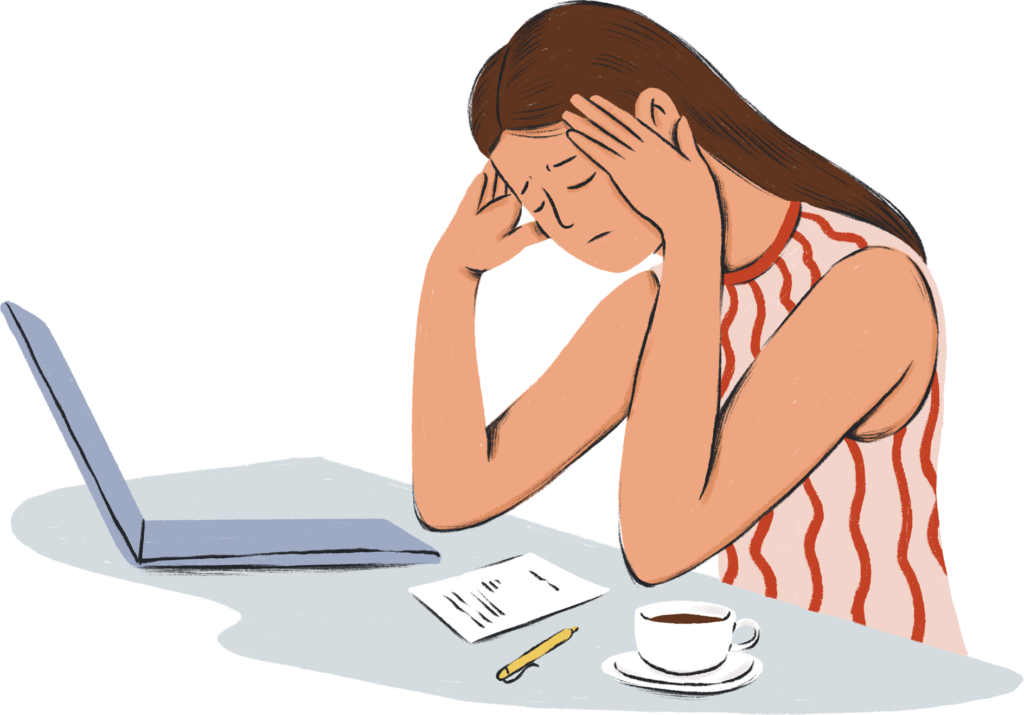
Drinking does not have to be extreme to cause harm. Learn the quiet warning signs, what Canada’s alcohol guidance says, how to cut back safely and where to find support in Alberta.

Maybe it started as a glass of wine to unwind after work. Or a few beers every evening during a stressful season. Now you notice you are drinking more than you planned, or that you look forward to it more than anything else in your day. You are not sure whether it is a problem, and you are not sure who to ask.
Questioning your drinking is not a sign of weakness. It is a sign of self-awareness. This guide explains the warning signs, what current Canadian guidance says, and the different kinds of support available, from cutting back on your own to counselling and medical help.
Key takeaways
- Problem drinking exists on a spectrum. You do not need to hit “rock bottom” to benefit from change.
- Warning signs include drinking more than planned, needing more for the same effect, and drinking to cope with stress or emotions.
- Canada’s Guidance on Alcohol and Health says risk rises with every drink, and that fewer drinks are better.
- If you drink heavily every day, do not stop suddenly without medical advice, because withdrawal can be dangerous.
- Counselling helps you understand why you drink and build other ways to cope, whether your goal is cutting back or stopping.
Drinking exists on a spectrum
Many people imagine alcohol problems as all or nothing: either you are fine, or you have a severe addiction. In reality, there is a large middle ground. Some people call it “grey area drinking”: not obviously out of control, but more than feels comfortable, and harder to cut back than expected.
Clinicians describe alcohol use disorder as ranging from mild to severe, depending on how many signs are present. Even mild patterns can affect health, sleep, mood and relationships.
Warning signs to watch for
Ask yourself honestly whether any of these apply over the past year:
- You often drink more or for longer than you intended
- You have tried to cut down but found it hard
- You spend a lot of time drinking or recovering from it
- You have strong cravings or urges to drink
- Drinking has affected work, school, parenting or home responsibilities
- You keep drinking even though it causes conflict with people you care about
- You have given up activities you used to enjoy
- You have driven or done other risky things after drinking
- You need more alcohol to feel the same effect
- You feel shaky, sweaty, anxious or unwell when you do not drink
The more of these that apply, the more likely it is that alcohol is causing harm. A counsellor or doctor can help you look at your pattern without judgment.
What Canada’s alcohol guidance says
In 2023, the Canadian Centre on Substance Use and Addiction released Canada’s Guidance on Alcohol and Health. Its main message is that any amount of alcohol carries some risk and that drinking less is better for health.
| Drinks per week | Risk level described in the guidance |
|---|---|
| 0 | Not drinking has benefits, such as better health and better sleep |
| 1 to 2 | Low risk of alcohol-related harm |
| 3 to 6 | Moderate risk, including increased risk of some cancers |
| 7 or more | Increasingly high risk |
The guidance also advises no more than two drinks on any one occasion, and no alcohol during pregnancy or while trying to get pregnant. A standard drink in Canada is roughly a 341 ml bottle of 5% beer, a 142 ml glass of 12% wine or 43 ml of 40% spirits.
Why people drink more than they want to
Understanding why you drink is often more useful than counting drinks alone. Common reasons include:
- Stress relief: a drink becomes the main way to switch off after work. Our article on burnout at work covers other ways to recover.
- Anxiety: alcohol briefly calms social or general anxiety, but anxiety often rebounds the next day.
- Sleep: alcohol can help you fall asleep but breaks up sleep later in the night.
- Low mood or grief: drinking can numb painful feelings for a while.
- Trauma: some people drink to quiet memories or stay calm.
- Habit and social life: drinking is woven into routines, friendships or work culture.
Example: Lisa, a nurse in Edmonton, started having two glasses of wine after night shifts to wind down. Over a year, it became most of a bottle, most days. She was not missing work, but she felt foggy, irritable with her partner and anxious in the mornings. When she tried a month without alcohol, she found evenings very hard. Counselling helped her see that wine had become her only way to decompress after difficult shifts, and she built a new routine of a shower, a short walk and a call with a friend.
How to cut back safely
If you drink moderately and want to reduce:
- Track your drinks for two weeks to see your real pattern.
- Set a clear goal, such as alcohol-free weekdays or no more than two drinks on any occasion.
- Plan for triggers. Notice when, where and with whom you drink most, and plan something different.
- Have alternatives ready, such as non-alcoholic drinks you enjoy.
- Tell someone you trust what you are working on.
- Notice the benefits, such as better sleep, mood or energy.
Important: if you drink heavily every day, or have had shaking, sweating, seeing things or seizures when you stop, do not quit suddenly. Alcohol withdrawal can be dangerous. Talk to your doctor or call Health Link at 811 for advice on a safe plan.
How counselling helps
Counselling for alcohol use is not about shaming or forcing you into a label. It focuses on what you want to change and why. It can help you:
- Explore your relationship with alcohol honestly
- Understand the emotions and situations that lead to drinking
- Build new coping skills for stress, anxiety, sleep and loneliness
- Work on relationship issues affected by drinking
- Prevent and plan for slips
- Address trauma, grief or depression underneath the drinking
At Disha, our alcohol addiction counselling in Edmonton and addiction recovery support are available in person or online, in English, Hindi, Nepali, Punjabi or Urdu. In many families, alcohol is a taboo subject, and talking in your own language can make it easier.
Support for family members
If someone you love drinks heavily, you may feel worried, angry or exhausted. Counselling can help you set boundaries, look after yourself and communicate without constant conflict. Our article on setting healthy boundaries with family may help.
Where to get help in Alberta
- Your family doctor for a health check and to discuss safe ways to cut back or stop
- Health Link at 811 for 24/7 health advice
- 211 Alberta to find community programs and supports
- 9-8-8 if you are in crisis or thinking about suicide
- 911 for a medical emergency, including signs of severe withdrawal or alcohol poisoning
Talk it through without judgment
Book a confidential session with Disha in South Edmonton or online anywhere in Alberta, whether your goal is cutting back or stopping.
Frequently asked questions
How do I know if I am an alcoholic?
Many professionals now talk about alcohol use disorder on a spectrum from mild to severe rather than using the label “alcoholic”. If drinking causes problems or is hard to control, it is worth talking to a doctor or counsellor.
Is it safe to stop drinking suddenly?
For people who drink heavily every day, stopping suddenly can cause dangerous withdrawal. Talk to your doctor or call Health Link at 811 before quitting.
Do I have to quit completely?
Not necessarily. Some people choose to stop, others to cut back. Counselling helps you decide on a goal that fits your health and situation.
How many drinks a week is safe in Canada?
Canada’s Guidance on Alcohol and Health says 2 or fewer drinks a week is low risk, and that drinking less is better for health.
Is alcohol counselling confidential?
Yes. Counselling is confidential, with limited legal exceptions that your counsellor will explain in your first session.
Can I get alcohol counselling online in Alberta?
Yes. Disha offers secure online sessions anywhere in Alberta, as well as in-person sessions in South Edmonton.
Disha Counselling & Wellness Centre is at 3818A 97 St NW #203, Edmonton, AB T6E 6N2, and offers online counselling across Alberta. Find us on Psychology Today and eMentalHealth.ca, watch short videos on YouTube and TikTok, or follow us on Instagram, LinkedIn, Facebook and Pinterest.
Reviewed by Mukesh Mishra, MSW, RCSW, Registered Clinical Social Worker and ACSW-approved RCSW supervisor at Disha Counselling & Wellness Centre. This article is general information and is not a substitute for individual professional advice. Counselling is not an emergency service: if you are in crisis, call or text 9-8-8 or call 911.
Ready to talk to someone?
If what you've just read sounds familiar, we are here to help. Explore Our Counselling Services or book a free 15-minute consultation with Disha Counselling & Wellness Centre.
Book a Consultation
It’s easy and free!

Mukesh Mishra, MSW, RCSW
Mukesh Mishra, MSW, RCSW, is a Registered Clinical Social Worker in Alberta at Disha Counselling & Wellness Centre in Edmonton. He provides trauma-informed, culturally responsive counselling in English, Hindi, Nepali, Punjabi and Urdu, using CBT, EMDR, DBT and the Gottman Method, and is an ACSW-approved RCSW supervisor for social workers.