Insomnia and mental health feed each other. Learn why your brain switches on at bedtime, which sleep habits really help, and how CBT-based sleep support works.
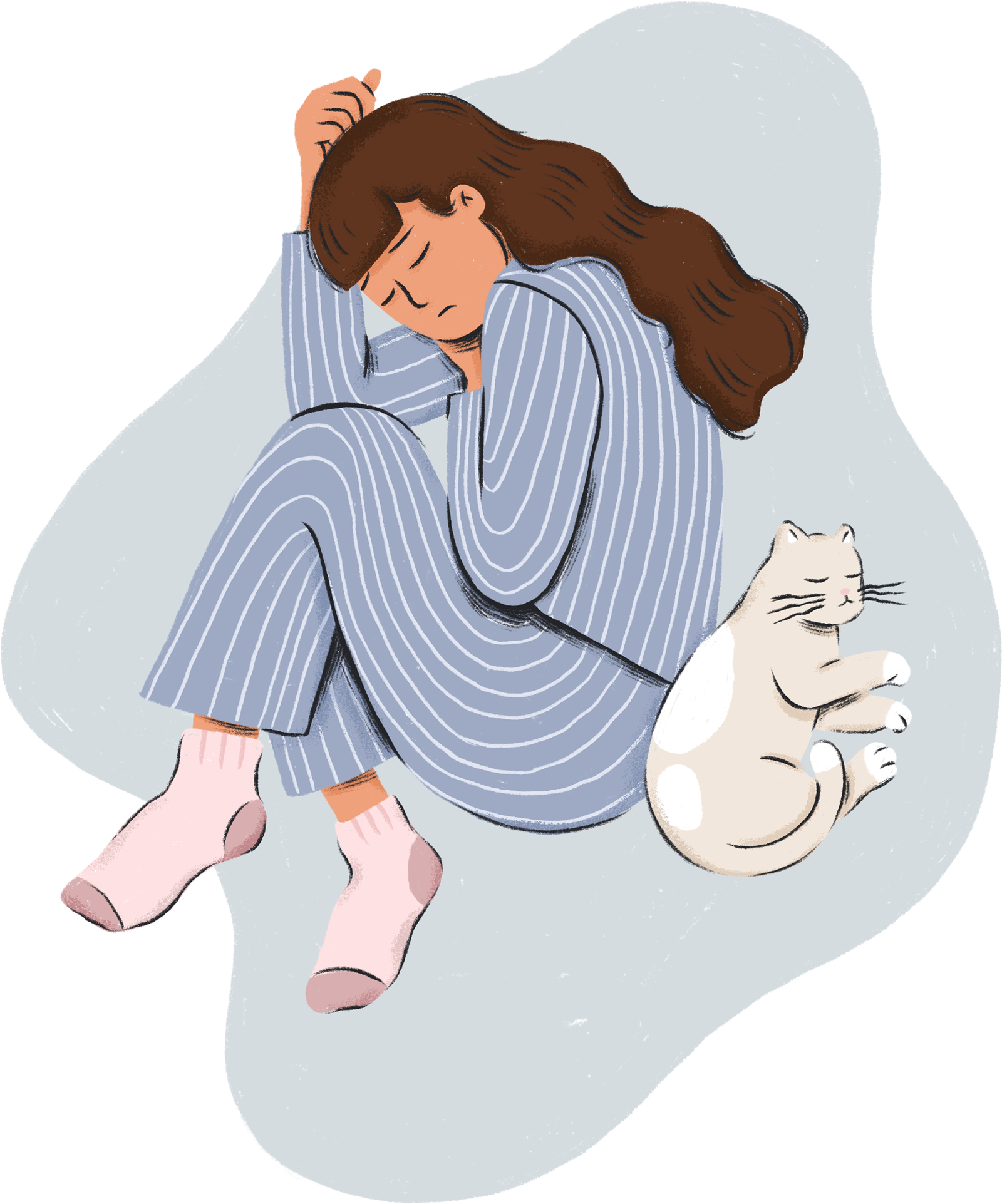
It is 2:47 a.m. You have checked the clock four times. Your body is exhausted but your mind is running through tomorrow’s meeting, a conversation from last week and the fact that you have to be up in four hours. The harder you try to sleep, the more awake you feel.
Insomnia is one of the most common reasons people struggle during the day, and it is closely tied to anxiety, low mood and stress. The good news is that it is also one of the most treatable. This guide explains how sleep and mental health affect each other, which strategies have the strongest evidence, and when it makes sense to get help.
Key takeaways
- Insomnia means trouble falling asleep, staying asleep or waking too early, along with daytime effects, despite having the chance to sleep.
- Poor sleep and mental health problems feed each other in both directions.
- Trying harder to sleep usually backfires. The goal is to reduce the effort and anxiety around sleep.
- CBT-based approaches, including CBT for insomnia (CBT-I), are recommended as a first-line treatment for chronic insomnia.
- See your doctor if you snore loudly, stop breathing in sleep, or feel very sleepy during the day, since these can point to a medical sleep disorder.
What counts as insomnia?
Everyone has a bad night now and then. Insomnia is more than that. It usually means:
- Trouble falling asleep, staying asleep or waking too early
- Problems on most nights, even when you have enough time and a comfortable place to sleep
- Daytime effects such as tiredness, poor concentration, irritability or low mood
When these problems happen at least three nights a week for three months or more, clinicians usually call it chronic insomnia. Shorter bouts, often triggered by stress, illness or a big life change, are common and often settle on their own, but they can turn into a long-term pattern if the habits that form around them stick.
How sleep and mental health affect each other
Sleep and mental health work in a loop.
Poor sleep makes emotions harder to manage
After a short night, the brain is more reactive to stress and less able to put things in perspective. Small problems feel bigger, patience runs thin and worry grows. Over time, ongoing insomnia is linked to a higher risk of depression and anxiety.
Anxiety and low mood disturb sleep
Anxiety keeps the body alert, which makes it hard to drift off. Depression often brings early waking or sleeping at odd times. Trauma can bring nightmares and a sense of being on guard at night. Our guides to signs of depression and coping after a traumatic event explain these patterns.
The worry about sleep itself
Many people with ongoing insomnia start to fear bedtime. They watch the clock, calculate how many hours are left and predict a terrible day. That fear keeps the brain alert, which leads to another bad night, and the pattern strengthens. This is why simply “trying to relax” often does not work.
Why your mind switches on at night
During the day you are busy. At night, with no distractions, unfinished thoughts finally get your full attention. Your bed can also become linked with frustration and wakefulness instead of sleep. The brain learns that bed is a place to think, plan and worry.
Long Alberta winters add another layer. Short days and little morning light can shift your body clock and affect mood, something we cover in our article on seasonal affective disorder in Edmonton.
Strategies that actually help
These strategies come from cognitive behavioural approaches to sleep. They work best when practised consistently for several weeks.
- Keep a fixed wake-up time. Get up at the same time every day, including weekends, even after a bad night. This is one of the most powerful ways to reset your body clock.
- Only go to bed when sleepy. Sleepy means eyes heavy and head nodding, not just tired. Going to bed too early gives you more time to lie awake.
- Get up if you cannot sleep. If you have been awake for what feels like 20 minutes, get up, go to another dim room and do something calm until you feel sleepy. This helps your brain relearn that bed is for sleep.
- Use the bed for sleep and intimacy only. Move scrolling, work, TV and worrying out of the bedroom.
- Schedule worry time earlier. Spend 15 minutes in the early evening writing down worries and one next step for each. When they show up at night, remind yourself they have a time slot.
- Get morning light. Spend time outside or near a bright window soon after waking. In winter, ask your doctor whether a light therapy lamp might help.
- Hide the clock. Clock-watching fuels anxiety. Turn it away and keep your phone out of reach.
- Wind down. Give yourself 30 to 60 minutes of low-light, low-stimulation time before bed.
Habits that help and habits that hurt
| Helps sleep | Gets in the way of sleep |
|---|---|
| Regular wake-up time every day | Sleeping in on weekends to catch up |
| Daytime light and movement | Long naps late in the afternoon |
| Caffeine only in the morning | Coffee, tea, energy drinks or cola after midday |
| A cool, dark, quiet room | Phones, laptops and TV in bed |
| A short wind-down routine | Working or arguing right before bed |
| Getting up when you cannot sleep | Lying in bed for hours trying to force sleep |
Alcohol deserves a special mention. It may help you fall asleep, but it breaks up sleep later in the night and can lead to early waking. If you rely on a drink to sleep, our article on signs drinking is becoming a problem may be useful.
Example: Daniel, a 38-year-old in Edmonton, started lying awake after a stressful project at work. He began going to bed earlier to “catch up”, sleeping in on Saturdays and having a drink to settle down. Months later, he still could not sleep. With a counsellor, he set a fixed 6:30 a.m. wake time, moved his bedtime later, stopped drinking in the evening and got up when he could not sleep. The first two weeks were tiring, but by week five he was falling asleep faster and waking less often.
What CBT for insomnia involves
Cognitive behavioural therapy for insomnia, often called CBT-I, is a structured approach that is recommended as a first-line treatment for chronic insomnia. It usually includes:
- A sleep diary to see your real patterns rather than your impressions
- Stimulus control, which retrains your brain to link bed with sleep
- Sleep scheduling, which matches your time in bed to the sleep you are actually getting, then gradually expands it
- Cognitive work to address beliefs such as “If I don’t get eight hours, tomorrow will be a disaster”
- Relaxation and mindfulness skills to calm the body and mind
At Disha, our sleep therapy in Edmonton draws on these CBT-based strategies and looks at the stress, anxiety or low mood that may be keeping insomnia going. You can learn more about the wider approach on our CBT therapy page.
When to see a doctor
Some sleep problems need a medical check. Talk to your family doctor or call Health Link at 811 if you:
- Snore loudly, gasp or stop breathing during sleep
- Feel very sleepy during the day, especially while driving
- Have uncomfortable urges to move your legs at night
- Have pain, reflux, hot flashes or other symptoms waking you
- Take medication that may affect sleep
Counselling and medical care often work well together.
Ready for better nights?
Our counsellors help with insomnia and the stress, anxiety or low mood behind it, in person in South Edmonton or online anywhere in Alberta.
Frequently asked questions
How many hours of sleep do adults need?
Most adults need about seven to nine hours, but needs vary. How rested you feel during the day is a more useful guide than an exact number.
Is it bad to use sleeping pills?
Sleep medication can help some people in the short term, but it does not change the habits and worries that keep insomnia going. Talk to your doctor before starting or stopping any medication.
How long does CBT for insomnia take?
CBT-based sleep treatment often takes about four to eight sessions, with practice between sessions. Many people notice changes within a few weeks.
Should I nap if I slept badly?
Long or late naps can make it harder to sleep at night. If you need to nap, keep it short and early in the afternoon.
Can anxiety cause insomnia?
Yes. Anxiety keeps the body alert and the mind busy, which makes it harder to fall and stay asleep. Treating the anxiety often improves sleep too.
Can I get sleep counselling online in Alberta?
Yes. Disha offers secure online sessions anywhere in Alberta and in-person sessions in South Edmonton.
Disha Counselling & Wellness Centre is at 3818A 97 St NW #203, Edmonton, AB T6E 6N2, and offers online counselling across Alberta. Find us on Psychology Today and eMentalHealth.ca, watch short videos on YouTube and TikTok, or follow us on Instagram, LinkedIn, Facebook and Pinterest.
Reviewed by Mukesh Mishra, MSW, RCSW, Registered Clinical Social Worker and ACSW-approved RCSW supervisor at Disha Counselling & Wellness Centre. This article is general information and is not a substitute for individual professional advice. Counselling is not an emergency service: if you are in crisis, call or text 9-8-8 or call 911.
Ready to talk to someone?
If what you've just read sounds familiar, we are here to help. Explore Our Counselling Services or book a free 15-minute consultation with Disha Counselling & Wellness Centre.
Book a Consultation
It’s easy and free!

Mukesh Mishra, MSW, RCSW
Mukesh Mishra, MSW, RCSW, is a Registered Clinical Social Worker in Alberta at Disha Counselling & Wellness Centre in Edmonton. He provides trauma-informed, culturally responsive counselling in English, Hindi, Nepali, Punjabi and Urdu, using CBT, EMDR, DBT and the Gottman Method, and is an ACSW-approved RCSW supervisor for social workers.