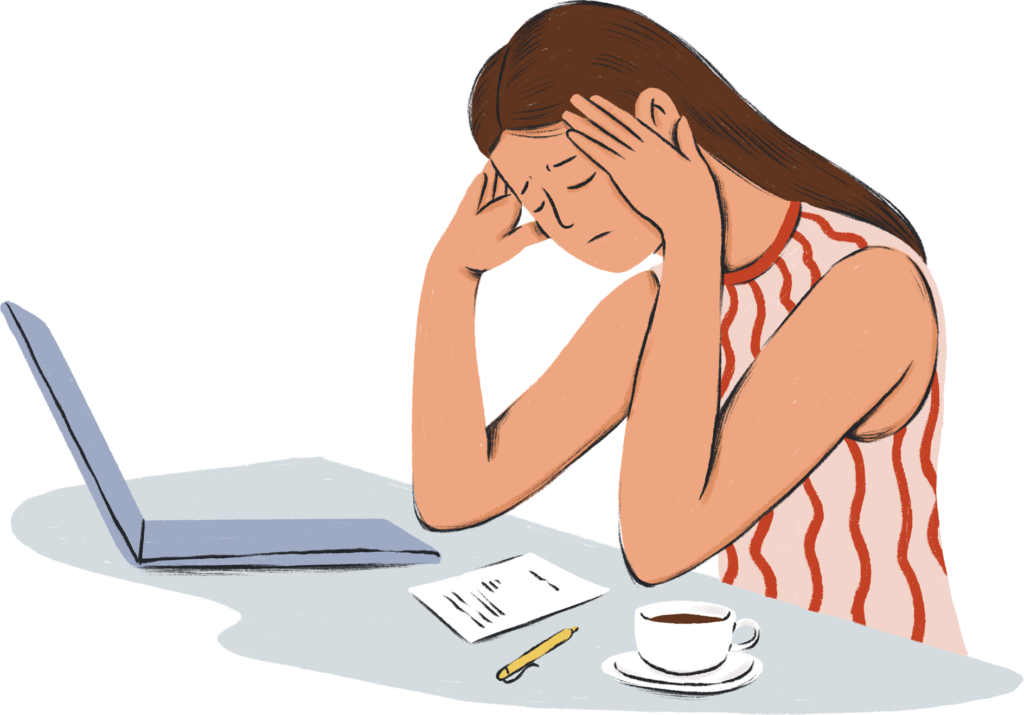
Some worry is a normal part of growing up. When fears start to shape your child’s days, it may be anxiety. Learn the signs and practical ways to help your child feel braver.

Every child worries sometimes: about the dark, a test, a new school or a dog down the street. These fears usually come and go. For some children, though, worry becomes a constant companion. They ask the same questions again and again, complain of stomach aches before school, cannot sleep alone or melt down when plans change.
Anxiety is one of the most common mental health concerns in children. The good news is that it is also very treatable, and parents play a central role in helping. This guide explains what to look for and what helps.
Key takeaways
- Some fear is normal and changes with age. Anxiety becomes a concern when it is intense, persistent and gets in the way of daily life.
- Children often show anxiety through their bodies and behaviour, such as stomach aches, tantrums or avoidance, rather than words.
- Avoidance and too much reassurance can accidentally make anxiety stronger.
- Parents help most by staying calm, validating feelings and encouraging small brave steps.
- Cognitive behavioural therapy (CBT), often with parent involvement, is a well-supported treatment for childhood anxiety.
Normal fears or anxiety?
| Age | Common, normal fears | Possible signs of anxiety |
|---|---|---|
| Toddlers and preschoolers | Strangers, loud noises, the dark, separation from parents | Extreme distress at every separation, tantrums whenever routines change |
| School-age children | Monsters, storms, getting hurt, making mistakes | Constant “what if” questions, refusing school, frequent stomach aches with no medical cause |
| Pre-teens | Social acceptance, performance at school or sports | Avoiding friends or activities, perfectionism, trouble sleeping |
The difference is usually in how intense the fear is, how long it lasts and how much it limits your child’s life.
Signs parents often miss
Children rarely say, “I feel anxious.” Instead, anxiety may show up as:
In the body
- Stomach aches, headaches or nausea, especially before school or activities
- Trouble falling asleep, nightmares or waking at night
- Needing the toilet frequently
- Feeling tired, tense or shaky
In behaviour
- Clinginess or refusing to sleep alone
- Avoiding school, birthday parties, sports or new situations
- Tantrums, irritability or anger when facing a feared situation
- Repeated questions and need for reassurance
- Perfectionism, erasing work over and over or meltdowns over small mistakes
In thoughts
- Constant “what if” worries
- Fear that something bad will happen to a parent
- Expecting the worst in many situations
Anger is easy to misread. A child who explodes before swimming lessons may be terrified, not defiant.
Common types of childhood anxiety
- Separation anxiety: intense fear of being apart from parents or caregivers
- Generalized anxiety: worrying about many everyday things, such as school, health or family
- Social anxiety: fear of embarrassment or being judged by peers. See our article on social anxiety.
- Specific phobias: intense fear of particular things, such as dogs, needles or vomiting
- Selective mutism: consistently not speaking in certain settings, such as school, despite speaking at home
- School refusal: strong distress about attending school, often linked to anxiety
What helps and what accidentally hurts
Parents naturally want to protect their children from distress. But some protective responses can keep anxiety going.
| Can accidentally feed anxiety | Helps your child build courage |
|---|---|
| Letting them avoid every feared situation | Encouraging small, manageable steps toward the fear |
| Answering the same reassurance question again and again | Answering once, then saying “I think you know the answer. What do you think?” |
| Saying “Don’t be silly, there’s nothing to worry about” | Saying “I can see you’re worried. That makes sense, and I know you can handle it.” |
| Doing tasks for them so they do not get upset | Supporting them while they try it themselves |
| Showing your own panic | Modelling calm coping, even if you feel worried inside |
Practical strategies at home
- Name the feeling. Help your child label anxiety: “It sounds like your worry brain is very loud right now.”
- Teach calming skills. Slow belly breathing, counting five things they can see, or squeezing and relaxing muscles.
- Make a brave ladder. Break a feared situation into small steps and practise each one, celebrating effort.
- Keep routines predictable. Regular sleep, meals and preview of changes reduce uncertainty.
- Schedule worry time. Give worries a short daily time slot to talk about them, then move on.
- Limit scary content. News, videos and older siblings’ games can feed fears.
- Praise bravery, not perfection. “You walked into class even though you were nervous. That took courage.”
- Look after your own anxiety. Children often learn by watching how adults cope.
Example: Seven-year-old Aarav cried every morning before school and often had stomach aches. His parents let him stay home a few times, but the mornings got worse. With a counsellor, they created a brave ladder: first walking to the school door together, then his dad saying goodbye at the gate, then Aarav walking in with a friend. They practised belly breathing at bedtime. Within six weeks, mornings were calmer and Aarav was proud of his “brave points”.
Culture, family and anxiety
In many families, especially newcomer and South Asian families, children may feel strong pressure to succeed academically or meet family expectations. They may also be navigating two cultures, languages or sets of rules. These pressures are not bad in themselves, but they can contribute to anxiety. Open, curious conversations about what your child is feeling help. Our article on South Asian mental health stigma explores how families can talk about mental health.
When to seek help
Consider professional support if:
- Anxiety lasts for weeks and is getting worse
- Your child is missing school or avoiding activities
- Physical complaints continue after a medical check
- Family life is organized around avoiding your child’s fears
- Your child talks about wanting to die or hurting themselves
Start with your family doctor to rule out medical causes, and talk with your child’s teacher about what they notice.
How child counselling helps
Cognitive behavioural therapy (CBT) is one of the best-supported treatments for childhood anxiety. For children, it is often playful and practical, using games, drawings and stories. If your child is older, our guide to recognizing teen anxiety covers how anxiety changes in adolescence. Parents are usually involved, learning how to coach brave behaviour at home.
At Disha, child counselling in Edmonton helps children understand their worries and build coping skills, with parent sessions to support progress at home. Our anxiety therapy and parenting support counselling may also help. If you are wondering whether something else is going on, such as attention or behaviour concerns, see our article on child behaviour and ADHD signs.
If your child is in crisis, call Kids Help Phone at 1-800-668-6868 or text CONNECT to 686868, call or text 9-8-8, or call 911.
Help your child feel braver
Book a child counselling session in South Edmonton or online, with parent involvement every step of the way.
Frequently asked questions
At what age can children have anxiety?
Anxiety can appear at any age, including in preschoolers. It often looks different in young children, showing up as clinginess, tantrums or physical complaints.
Will my child grow out of anxiety?
Some fears fade naturally, but anxiety that is intense and persistent often continues without support. Early help can prevent it from becoming more entrenched.
Should I let my anxious child stay home from school?
Staying home often makes school anxiety worse over time. Work with the school and a counsellor on a gradual plan to support attendance.
How can I tell if stomach aches are from anxiety?
See your doctor first to rule out medical causes. If aches happen mainly before school or stressful events and ease afterwards, anxiety may be involved.
Do parents take part in child counselling?
Yes. Parent involvement is an important part of treating childhood anxiety, and counsellors often meet with parents to share strategies.
Can child counselling be done online?
For some children it can, especially older children. Younger children often do best with in-person sessions, and your counsellor can help you decide.
Disha Counselling & Wellness Centre is at 3818A 97 St NW #203, Edmonton, AB T6E 6N2, and offers online counselling across Alberta. Find us on Psychology Today and eMentalHealth.ca, watch short videos on YouTube and TikTok, or follow us on Instagram, LinkedIn, Facebook and Pinterest.
Reviewed by Mukesh Mishra, MSW, RCSW, Registered Clinical Social Worker and ACSW-approved RCSW supervisor at Disha Counselling & Wellness Centre. This article is general information and is not a substitute for individual professional advice. Counselling is not an emergency service: if you are in crisis, call or text 9-8-8 or call 911.
Ready to talk to someone?
If what you've just read sounds familiar, we are here to help. Explore Anxiety Therapy in Edmonton or book a free 15-minute consultation with Disha Counselling & Wellness Centre.
Book a Consultation
It’s easy and free!

Mukesh Mishra, MSW, RCSW
Mukesh Mishra, MSW, RCSW, is a Registered Clinical Social Worker in Alberta at Disha Counselling & Wellness Centre in Edmonton. He provides trauma-informed, culturally responsive counselling in English, Hindi, Nepali, Punjabi and Urdu, using CBT, EMDR, DBT and the Gottman Method, and is an ACSW-approved RCSW supervisor for social workers.