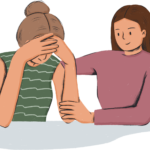
Intimacy often fades for understandable reasons. Learn what causes a sexless marriage, how to talk about it without blame and how couples reconnect.

A sexless marriage usually describes a long-term relationship where sex has stopped or become very rare, often described as fewer than about ten times a year. It is more common than most people think, and it happens for understandable reasons: stress, young children, health changes, unresolved conflict or a mismatch in desire. A sexless marriage is only a problem if one or both partners are unhappy about it. When that is the case, most couples can rebuild intimacy by understanding the causes, talking honestly without blame and taking small steps back toward closeness.
Key takeaways
- Low or no sex is common in long-term relationships and rarely has a single cause.
- Desire differences are normal. Many people feel desire in response to closeness rather than spontaneously.
- Physical health, medications and pain can play a big role, so a medical check-up is worth considering.
- Blame and pressure usually make desire drop further. Curiosity and safety help it return.
- Counselling gives couples a structured, private place to talk about intimacy.
Why intimacy fades
Most couples do not decide to stop having sex. It drifts. Common reasons include:
- Stress and exhaustion: work, money worries, caregiving and lack of sleep
- Parenthood: pregnancy, postpartum recovery, breastfeeding, and children in the bed or room
- Health changes: chronic pain, diabetes, heart conditions, hormonal changes, perimenopause and menopause, and erectile difficulties
- Medications: some antidepressants, blood pressure medications and other prescriptions affect desire or arousal
- Mental health: depression, anxiety and trauma can lower desire or make touch feel unsafe
- Unresolved conflict: resentment, feeling unappreciated or an unfair split of household work
- Desire discrepancy: one partner wants sex more often than the other, and the gap turns into a pursue-and-withdraw pattern
- Trust ruptures: infidelity, secrecy or pornography use that one partner experiences as a betrayal
- Privacy and space: living with extended family or in a small home can make intimacy hard to find
Spontaneous vs responsive desire
One of the most useful ideas for couples is that desire does not work the same way for everyone. Some people experience spontaneous desire: they want sex out of the blue. Many others, especially in long relationships, experience responsive desire: interest appears after closeness, affection or arousal has already begun.
If one partner waits to feel spontaneous desire before initiating, it may never come, not because love is gone but because their desire needs a different starting point. Understanding this takes the pressure off and opens new ways to reconnect.
How to talk about it without blame
- Pick the right moment. Not in bed, not after rejection, not in the middle of an argument.
- Start with the relationship, not the act. “I miss feeling close to you” lands differently than “We never have sex.”
- Use I statements. Describe your feelings and needs rather than your partner’s failings.
- Get curious. Ask what gets in the way for them, and listen without defending.
- Go slow. One conversation will not fix it. Aim to understand each other first.
The partner with lower desire often feels pressured and guilty. The partner with higher desire often feels rejected and unwanted. Both experiences are real, and both deserve compassion.
Practical steps to reconnect
- Rebuild non-sexual affection. Hugs, holding hands and touch that does not have to lead anywhere help both partners feel safe again.
- Make time for each other. Regular time together without phones or children rebuilds friendship, which is the foundation of intimacy.
- Take sex off the table for a while. Some couples use structured exercises, often called sensate focus, that remove performance pressure and focus on touch and pleasure step by step.
- Address the background stress. Share household and parenting load more fairly. Resentment is a powerful desire killer.
- See your doctor. Rule out medical causes, review medications and ask about pain or hormonal changes.
- Repair old hurts. If an affair or betrayal is in the background, intimacy usually returns only after trust is rebuilt.
When to get support
Consider counselling if:
- You cannot talk about sex without it turning into a fight or silence
- One of you feels hopeless, resentful or is thinking about leaving
- Trauma, anxiety, pain or past experiences make intimacy difficult
- Infidelity or pornography use has affected trust
Counsellors who work with intimacy are used to these conversations, and you set the pace. At Disha, sexuality and intimacy counselling and couples counselling offer a confidential space to work on this together or individually. If trust is the main issue, see infidelity and affair recovery counselling. If compulsive pornography use is part of the picture, porn addiction therapy may help.
Culture, faith and talking about sex
In many families and communities, sex is rarely discussed openly, and some people grew up with little information or with messages of shame. That can make it harder to name problems or ask for help. A culturally responsive counsellor respects your values and works within them. Sessions are confidential and available in English, Hindi, Nepali, Punjabi and Urdu.
Talk to a Registered Clinical Social Worker
Want to feel close again? Book a confidential intimacy or couples counselling session, in person in Edmonton or online.
Frequently asked questions
What counts as a sexless marriage?
It is often described as a relationship with sex fewer than about ten times a year, but there is no official definition. What matters most is whether both partners are content with how things are.
Can a sexless marriage be saved?
Many couples rebuild intimacy once they understand the causes and talk about it without blame. Counselling and a medical check-up can both help.
Is it normal for desire to drop after having children?
Yes. Sleep loss, physical recovery, hormonal changes and the demands of parenting commonly lower desire. Intimacy often returns gradually with time, support and shared effort.
Can I come to counselling on my own?
Yes. Individual sessions can help you understand your feelings, prepare for conversations with your partner and work on factors such as anxiety or past trauma.
Is sex therapy the same as couples counselling?
They overlap. Couples counselling covers the whole relationship, while intimacy-focused counselling looks more closely at desire, arousal and sexual concerns. Many couples benefit from both.
Disha Counselling & Wellness Centre is at 3818A 97 St NW #203, Edmonton, AB T6E 6N2, and offers online counselling across Alberta. Find us on Psychology Today and eMentalHealth.ca, watch short videos on YouTube and TikTok, or follow us on Instagram, LinkedIn and Facebook.
Reviewed by Mukesh Mishra, MSW, RCSW, Registered Clinical Social Worker and ACSW-approved RCSW supervisor at Disha Counselling & Wellness Centre. Last updated October 1, 2026. This article is general information and is not a substitute for individual professional advice.
Ready to talk to someone?
If what you've just read sounds familiar, we are here to help. Explore Couples Counselling in Edmonton or book a free 15-minute consultation with Disha Counselling & Wellness Centre.
Book a Consultation
It’s easy and free!

Mukesh Mishra, MSW, RCSW
Mukesh Mishra, MSW, RCSW, is a Registered Clinical Social Worker in Alberta at Disha Counselling & Wellness Centre in Edmonton. He provides trauma-informed, culturally responsive counselling in English, Hindi, Nepali, Punjabi and Urdu, using CBT, EMDR, DBT and the Gottman Method, and is an ACSW-approved RCSW supervisor for social workers.