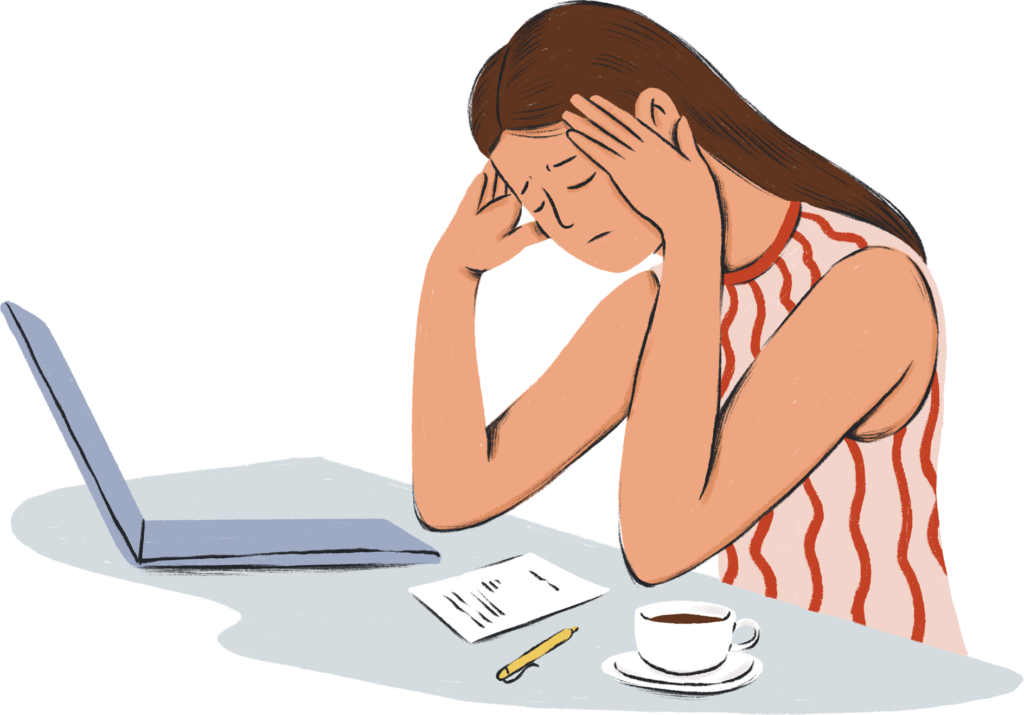
How everyday stress differs from generalized anxiety disorder, signs worry may need attention, and when to seek anxiety support in Edmonton, Alberta.

Everyone feels stressed sometimes. A deadline looms, a bill arrives, a child is unwell, and worry naturally rises. But for some people, worry doesn’t fade when the situation passes. It moves from one topic to the next, lingers for months and starts to shape daily life.
Understanding the difference between normal stress and generalized anxiety disorder (GAD) can help you know when worry is a natural part of life and when it may be time to seek support.
Quick answer: Normal stress is a short-term response to a specific challenge and usually eases when the situation is resolved. Generalized anxiety disorder involves excessive, hard-to-control worry about many areas of life, lasting most days for at least six months, along with symptoms like restlessness, fatigue, poor concentration, irritability, muscle tension and sleep problems. Only a qualified professional can diagnose GAD, but effective support, including CBT, is available.
Key Takeaways
- Stress is a normal, often temporary response to life’s demands.
- GAD involves persistent, excessive worry that is difficult to control.
- Duration, intensity and impact on daily life help distinguish the two.
- Only a qualified professional can diagnose an anxiety disorder.
- Counselling, especially CBT, can help with both stress and anxiety.
What Is Normal Stress?
Stress is the body and mind’s response to demands or pressure. It can even be helpful, motivating us to prepare for an exam or meet a deadline. Normal stress usually:
- Is linked to an identifiable situation.
- Feels proportionate to the challenge.
- Eases once the situation is resolved or you adapt to it.
- Doesn’t significantly disrupt daily life for long periods.
For example, feeling anxious before a job interview, then relieved afterward, is a typical stress response.
What Is Generalized Anxiety Disorder?
Generalized anxiety disorder is a mental health condition characterized by excessive worry about a range of everyday matters, such as health, work, finances, family or minor daily tasks. The worry feels difficult to control and is often out of proportion to the actual situation.
According to commonly used diagnostic criteria, GAD involves worry occurring more days than not for at least six months, along with several of the following:
- Restlessness or feeling on edge.
- Getting tired easily.
- Difficulty concentrating or mind going blank.
- Irritability.
- Muscle tension.
- Sleep problems.
These symptoms cause significant distress or interfere with work, relationships or other areas of life.
Key Differences Between Stress and GAD
Trigger
Stress usually has a clear cause. GAD worry often jumps between topics, even when nothing specific is wrong.
Duration
Stress tends to be temporary. GAD persists for months and may feel like a constant background hum.
Proportion
Stress responses generally match the situation. GAD worry is often larger than the situation warrants.
Control
With stress, you can usually set worries aside when needed. With GAD, worry feels hard to stop.
Impact
Stress may cause temporary disruption. GAD can affect sleep, health, work and relationships over long periods.
A Simple Self-Reflection
Ask yourself:
- Do I worry most days, about many different things?
- Has this been happening for six months or longer?
- Do I find it hard to stop worrying even when I try?
- Is worry affecting my sleep, work or relationships?
- Do I feel physically tense or exhausted much of the time?
Answering yes to several questions does not mean you have GAD, but it may be a sign to talk with a doctor or counsellor.
Factors That Can Contribute to Anxiety
Anxiety can be influenced by genetics, personality, life experiences, ongoing stress, trauma and health conditions. Major life changes, such as immigration, job loss, parenthood or caregiving, can also increase vulnerability. Long, dark winters in Edmonton may affect mood and energy for some people.
Healthy Ways to Manage Stress and Worry
1. Name the Worry
Write down what you’re worried about. Seeing worries on paper can make them feel more manageable.
2. Separate Solvable From Unsolvable
For solvable problems, plan one small next step. For hypothetical worries, practise gently letting them pass.
3. Schedule “Worry Time”
Set aside 15 minutes daily to worry intentionally. When worries arise at other times, note them for later.
4. Care for Your Body
Regular sleep, movement, balanced meals and reduced caffeine support emotional resilience.
5. Connect With Others
Talking with supportive people can reduce the weight of worry.
How Counselling Can Help
Whether you’re dealing with everyday stress or persistent anxiety, counselling can help. Cognitive behavioural therapy is one of the most widely researched treatments for GAD. It teaches you to recognize anxious thinking patterns, test them and respond more flexibly. Anxiety therapy in Edmonton at Disha may combine CBT with relaxation skills, mindfulness and practical problem-solving.
How Disha Counselling Can Help
At Disha Counselling & Wellness Centre in South Edmonton, our counsellors support individuals experiencing stress and anxiety with compassion and evidence-informed care. Sessions are available in person or online across Alberta.
A Closer Look: An Illustrative Example
Two friends started new jobs in Edmonton during the same month. Amira felt nervous before her first day, had a few restless nights and worried about learning the new systems. Within a few weeks, as she settled in, her worry faded. Her friend Jordan also felt anxious about the new job. But his worry didn’t fade. It shifted to his health, his parents’ aging, his finances and whether friends were upset with him. Months later, he still had trouble sleeping, felt tense most days and found it hard to concentrate. When he spoke to his doctor, he learned his experience might be more than typical stress. He began CBT-based counselling, learning to recognize worry patterns and practise scheduled worry time. Over several months, Jordan’s worry became more manageable. Both experiences were valid, but they differed in duration, intensity and impact, the key differences between normal stress and GAD.
This is a composite example created for illustration. It does not describe a real client.
Frequently Asked Questions
Can stress turn into an anxiety disorder?
Ongoing stress can contribute to anxiety for some people, especially when combined with other factors. Early support can help.
How is GAD diagnosed?
A qualified health professional, such as a physician or psychologist, assesses symptoms, duration and impact on daily life.
Is GAD treatable?
Yes. Many people experience significant improvement with counselling, particularly CBT, and other supports.
Should I wait six months before seeking help?
No. You can seek support any time worry feels difficult to manage.
Book Your Free 15-Minute Consultation
Ready to take the next step? Disha Counselling & Wellness Centre in South Edmonton offers a free 15-minute consultation so you can ask questions, share what you’re looking for and see whether our approach feels like the right fit. Sessions are available in person at our South Edmonton office or through secure online counselling anywhere in Alberta. Book your free consultation or contact our team today.
Our counsellors provide warm, culturally responsive and evidence-informed care for individuals, couples and families, drawing on approaches such as cognitive behavioural therapy (CBT), trauma-informed practice and Gottman-informed couples work where appropriate. Whatever you’re facing, you don’t have to face it alone.
If You Need Help Right Now
If you are in crisis or thinking about harming yourself, call or text 9-8-8 (Suicide Crisis Helpline), call the Alberta Mental Health Help Line at 1-877-303-2642, or call 911. For family violence support in Alberta, call 310-1818.
This article is for general educational purposes only and is not a substitute for professional diagnosis, treatment or advice. Please speak with a qualified health professional about your specific situation.
Ready to talk to someone?
If what you've just read sounds familiar, we are here to help. Explore Anxiety Therapy in Edmonton or book a free 15-minute consultation with Disha Counselling & Wellness Centre.
Book a Consultation
It’s easy and free!

Mukesh Mishra, MSW, RCSW
Mukesh Mishra, MSW, RCSW, is a Registered Clinical Social Worker in Alberta at Disha Counselling & Wellness Centre in Edmonton. He provides trauma-informed, culturally responsive counselling in English, Hindi, Nepali, Punjabi and Urdu, using CBT, EMDR, DBT and the Gottman Method, and is an ACSW-approved RCSW supervisor for social workers.