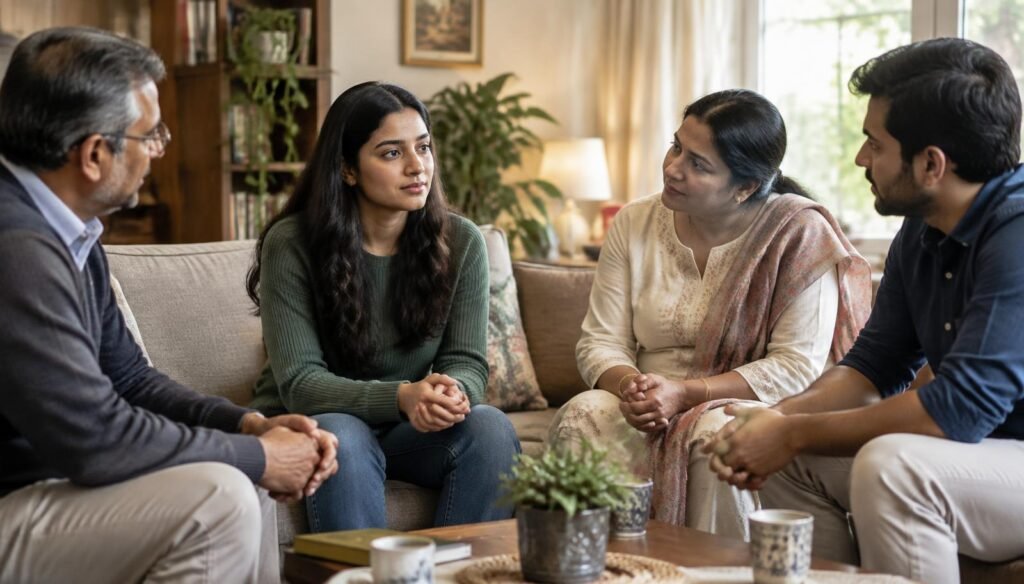
What emotional infidelity is, why it hurts so deeply, and the first realistic steps Edmonton couples can take to rebuild trust and repair their bond.

Discovering that your partner shared intimate thoughts, secrets or emotional closeness with someone else can be devastating, even if nothing physical happened. Many people describe feeling confused, replaced and unsure whether they are “allowed” to be as hurt as they are.
If you are facing this, your pain is valid. Emotional infidelity can shake the foundation of trust just as deeply as a physical affair. The good news is that many couples do rebuild, and sometimes they build something stronger than before.
Quick answer: Rebuilding trust after emotional infidelity begins with ending the outside connection, full honesty about what happened, the involved partner taking responsibility without defensiveness, patience with the hurt partner’s emotions, consistent transparency over time, and often support from a couples counsellor experienced in affair recovery.
Key Takeaways
- Emotional infidelity involves secrecy and emotional intimacy outside the relationship.
- The hurt partner’s reactions, including anger, anxiety and replaying events, are normal.
- Recovery requires ending the outside connection and consistent transparency.
- Trust is rebuilt through repeated actions over time, not a single apology.
- Affair recovery counselling can guide couples through each stage.
What Is Emotional Infidelity?
Emotional infidelity usually describes a relationship outside the partnership that involves emotional intimacy, secrecy and a sense of being prioritized over the partner. It might look like:
- Sharing personal struggles with someone else instead of your partner.
- Hiding messages, deleting conversations or being defensive about a friendship.
- Feeling excitement or anticipation about contact with that person.
- Discussing relationship problems with them in a way that builds closeness.
Couples define boundaries differently, and culture influences what feels acceptable. What often makes it a betrayal is the secrecy and the sense that the relationship’s emotional exclusivity was broken.
Why Emotional Infidelity Hurts So Much
It Touches Our Need to Feel Chosen
Many people experience emotional connection as the heart of their relationship. Learning that a partner turned to someone else can trigger deep questions: “Am I enough? What else don’t I know?”
The Discovery Can Feel Traumatic
Hurt partners often describe intrusive thoughts, difficulty sleeping, checking behaviours and intense swings between anger and sadness. These are understandable stress responses to a betrayal of attachment, not signs of being “too sensitive.”
Where to Begin: First Steps Toward Rebuilding Trust
1. End the Outside Connection
Recovery is very difficult while the emotional affair continues. The involved partner usually needs to end contact clearly, and ideally share how it was ended. If contact is unavoidable, such as at work, agree together on boundaries and transparency.
2. Allow Honest Questions
The hurt partner may need to ask many questions. Answering honestly and without minimizing helps rebuild trust. A counsellor can help couples balance the need for information with avoiding painful detail that does not aid healing.
3. Take Responsibility Without Defending
For the involved partner, the most helpful stance is ownership: “I made choices that hurt you, and I’m committed to understanding why.” Explaining context can come later; early on, defensiveness tends to reopen the wound.
4. Make Room for the Hurt Partner’s Emotions
Healing is not linear. There may be good days followed by sudden waves of pain triggered by a song, a date or a notification. Patience and reassurance during these moments are part of repair.
5. Create Transparency
Many couples agree to a period of increased openness, such as sharing phone access or checking in during the day. Transparency is not about punishment; it gives the hurt partner evidence that the relationship is safe again.
6. Explore What Made the Relationship Vulnerable
Once the immediate crisis settles, couples can explore what was happening before the affair: distance, unmet needs, stress, communication patterns. This is not about blaming the hurt partner. It is about understanding and strengthening the relationship going forward.
The Stages of Affair Recovery
Gottman-informed affair recovery is often described in three phases:
- Atonement: honesty, remorse, and responding to the hurt partner’s pain.
- Attunement: rebuilding emotional connection, communication and understanding.
- Attachment: renewing intimacy and creating a shared vision for the future.
Couples move through these phases at different paces. Some decide, after careful reflection, that separation is right for them. Counselling can support a thoughtful decision either way.
Taking Care of Yourself as the Hurt Partner
- Lean on one or two trusted, non-judgmental people.
- Keep basic routines: sleep, meals, movement.
- Write down your thoughts when they feel overwhelming.
- Give yourself permission not to decide about the future right away.
- Consider individual counselling to process your emotions separately.
When to Seek Professional Help
Infidelity is one of the most common reasons couples seek therapy. A counsellor provides a structured, neutral space where both partners can speak and be heard. Disha offers dedicated infidelity and affair recovery counselling in Edmonton, as well as general couples counselling.
If the discovery has left you with ongoing anxiety, panic or difficulty functioning, anxiety therapy can also help you regain stability.
How Disha Counselling Supports Couples After Betrayal
At Disha Counselling & Wellness Centre in South Edmonton, our counsellors offer compassionate, non-judgmental support to couples navigating betrayal. We respect each couple’s values, culture and faith, and help partners make decisions that feel right for them. Sessions are available in person or online across Alberta.
A Closer Look: An Illustrative Example
Priya discovered months of late-night messages between her husband, Arjun, and a colleague. Nothing physical had happened, but the messages were affectionate and personal, full of conversations Priya felt should have been hers. At first, Arjun insisted it was “just a friendship,” which deepened her hurt. Things began to shift only when he ended contact, moved to a different project team and stopped defending himself. In couples sessions, Priya was able to ask her questions and express anger without Arjun shutting down. Over time, they recognized that years of working opposite shifts in Edmonton had left them living like roommates. Arjun learned to answer questions openly and check in during the day without being asked. Priya learned to notice when reassurance landed. Several months later, trust was not fully restored, but both described feeling like a team again, with honest conversations replacing silence.
This is a composite example created for illustration. It does not describe a real client.
Frequently Asked Questions
Can a relationship survive emotional infidelity?
Many relationships do recover, especially when the outside connection ends, the involved partner takes responsibility, and both commit to the repair process.
How long does it take to rebuild trust?
It varies widely. Many couples find meaningful progress takes many months. Consistency over time matters more than speed.
Is it emotional cheating if nothing physical happened?
Many people experience it as a betrayal because of the secrecy and emotional intimacy involved. Couples often benefit from defining their own boundaries clearly.
Should we tell family or friends?
Choose carefully. Sharing with many people can make reconciliation harder. One or two trusted supports, or a counsellor, are often enough.
Book Your Free 15-Minute Consultation
Ready to take the next step? Disha Counselling & Wellness Centre in South Edmonton offers a free 15-minute consultation so you can ask questions, share what you’re looking for and see whether our approach feels like the right fit. Sessions are available in person at our South Edmonton office or through secure online counselling anywhere in Alberta. Book your free consultation or contact our team today.
Our counsellors provide warm, culturally responsive and evidence-informed care for individuals, couples and families, drawing on approaches such as cognitive behavioural therapy (CBT), trauma-informed practice and Gottman-informed couples work where appropriate. Whatever you’re facing, you don’t have to face it alone.
If You Need Help Right Now
If you are in crisis or thinking about harming yourself, call or text 9-8-8 (Suicide Crisis Helpline), call the Alberta Mental Health Help Line at 1-877-303-2642, or call 911. For family violence support in Alberta, call 310-1818.
This article is for general educational purposes only and is not a substitute for professional diagnosis, treatment or advice. Please speak with a qualified health professional about your specific situation.
Ready to talk to someone?
If what you've just read sounds familiar, we are here to help. Explore Our Counselling Services or book a free 15-minute consultation with Disha Counselling & Wellness Centre.
Book a Consultation
It’s easy and free!

Mukesh Mishra, MSW, RCSW
Mukesh Mishra, MSW, RCSW, is a Registered Clinical Social Worker in Alberta at Disha Counselling & Wellness Centre in Edmonton. He provides trauma-informed, culturally responsive counselling in English, Hindi, Nepali, Punjabi and Urdu, using CBT, EMDR, DBT and the Gottman Method, and is an ACSW-approved RCSW supervisor for social workers.